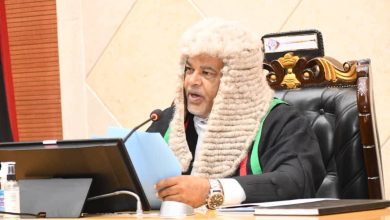
For all intents and purposes, His Worship Isaac Jomo Osman—the benevolent Mayor of Blantyre and freshly anointed Sovereign of the Malawi Local Government Association (Malga)—is a saint. To suggest otherwise is not merely a breach of etiquette; it is a reckless gamble with one’s own physical structural integrity, depending on which side of his “street” you are currently loitering in.
Lately, the Mayor has been “entangled” in certain “incidents”.
Critics—mostly those who indulge in the elitist luxury of reading statutes by candlelight—have been shrill in their condemnation of his city management. But these detractors suffer from a tragic lack of vision. If we possessed the intellectual depth to truly appreciate Jomo’s humble beginnings, we’d see that his leadership isn’t ‘chaotic’; it’s ‘unfiltered’—because why bother with a filter when you have absolutely nothing to hide, or perhaps, just nothing to lose?”
You see, Jomo was forged by the street. And on the street, due process is meted out with a rhythmic efficiency that puts our sluggish, tuxedoed court systems to shame. In the sterile halls of civic offices, one might expect a memo; in Jomo’s jurisdiction, a grievance is settled with the refreshing directness of a hammer kissing a nail.
Jomo may have vacated the street, but the street has clearly claimed squatters’ rights in his soul. This is most apparent in his approach to law enforcement, which he treats less like a boring bureaucratic necessity and more like a high-stakes, tactical smash-and-grab.
In the five frantic months Jomo has donned the mayoral chain, he has arguably “achieved” more than some of his predecessors managed in a full tenure. While previous mayors wasted terms sipping tea and politely debating urban planning, Jomo has taken a more performative and impulsive approach to leadership.
His climb is a sight to behold. Bursting onto the scene on July 22 2024, as a DPP councillor with a modest 11 votes for deputy, his ascent has been nauseatingly vertical. By November 2025, he was Mayor; by December 18, he had snatched the Malga presidency in a 34-to-2 landslide—a victory so lopsided one wonders if the other candidate forgot to show up or the delegates were simply blinded by the glare of the “Jomo Brand”.
Since his swearing-in, Blantyre has become a captive spectator sport. Jomo favours a hands-on—or rather, hands-all-over—leadership style. He doesn’t merely delegate tax collection; he becomes the debt collector himself. When the Malawi Congress Party owed the city K132 million or the Malawi Housing Corporation sat on K433 million in city rates, Jomo didn’t send a bailiff; he staged a photo op. There is a delicious irony in a mayor personally padlocking the State-owned enterprises’ doors—the kind of “accountability” only a man who treats city hall like his personal block can provide.
His recent 21-day ultimatum to businesses for K8 billion isn’t a legal notice; in Jomo’s Blantyre, it’s a ticking clock in a thriller no one asked to watch.
Oh, we absolutely must be sympathetic. Is it really Jomo’s fault that his “urban order” carries the refined ambiance of a pub fight? Or that his “social welfare” arrives with all the delicate nuance of a bulldozer? In a city of stagnation, Jomo is the ultimate man of action. He treats the city budget like a personal debt-collection circuit and regards bylaws as mere creative suggestions.
While the elites choke on his lack of “diplomatic finesse,” the locals see a man who delivers. For them, Jomo represents a shift toward “cinematic” leadership—why waste time on a court order when you can bring a padlock and a camera crew?
We should stop measuring him against some lofty Great Charter and start judging him by the lived realities and laws of Bangwe in Blantyre, Ntandile in Lilongwe, and Mchengautuwa in Mzuzu. He isn’t just a mayor; he’s a force of nature. And in Blantyre—just as in Lilongwe and Mzuzu—if you aren’t part of the “force,” you’re likely just a speed bump in his next city rates raid.
Naturally, the critics love to whine that “two wrongs don’t make a right”—as if Jomo ever bothered to deny slapping a woman for the “crime” of holding stolen property. But where is that same moral fervour for the soldiers? It’s fascinating how civil society and human rights crusaders suffer from sudden, deafening silence when soldiers raid gold mining sites in the dead of night.
Assaulting women and looting their hard-earned property at Kamchocho in Mzimba are being rebranded as routine, conveniently ignored because they don’t fit into a tidy narrative of a single, identifiable villain.
Justice is a beautiful concept, right until it’s served with this heavy dose of selective amnesia. If our activists want to keep their halos from slipping, they might try speaking up against everyone—Jomo and the military alike. True advocacy requires standing up for principles regardless of visibility or setting, rather than performing for the aesthetic. This perspective challenges the authenticity of activism that relies on curated, cinematic backdrops to gain attention.